Showing posts with label American religious history. Show all posts

Tuesday, 27 October 2015

Books that I am reading

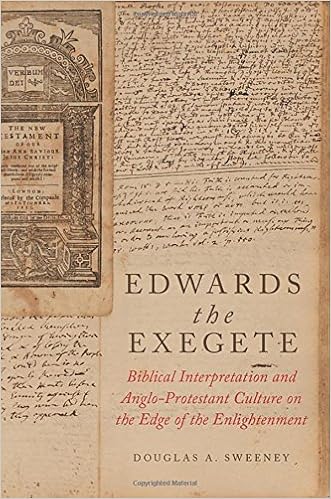
As I wrap up the research for my book on Jonathan Edwards and Transatlantic Print Culture, I finally have some time to catch up on some reading within my discipline. Currently, I am reading the following recently published books:


Wednesday, 19 February 2014

Religion, Sex, and Politics in America

What happens when you offer a public lecture by one of America's leading religious scholars entitled "Religion, Sex and Politics: An American History"? Answer: Over 200 people show up to a venue that holds 150.

After eating dinner at St. John's Restaurant with our speaker, colleagues, and friends, we all made our way to the Camp House to find that the place was absolutely packed with people. Before 7pm, the Camp House had given away its 100 free drink vouchers. One person I talked with had driven from Pigeon Forge, which is over two hours from Chattanooga. After introducing Marie Griffith, I made my way to the very back of the room where I found a wedge of space to hear her talk.

In her lecture, Marie Griffith focused on three case studies involving the birth control advocate Margaret Sanger, the zoologist turned sexologist Alfred Kinsey, and the conservative Protestant Billy James Hargis. Griffith did not make any explicit statements about one person's view being correct versus another. Instead, she presented these case studies as a way of showing how Americans in the past have reacted to issues relating to religion and sexuality. Overall, it was a wonderful and intellectually stimulating talk, and a great way to close out this year's LeRoy Martin Distinguished Lecturer Series.


Monday, 18 November 2013

Religion and the Making of American Citizens

This past weekend my colleague Lucien Ellington and I organized an institute entitled, "Religion and the Making of American Citizens: Past, Present, and Future," for local high school teachers. We arranged for seven scholars to talk to two dozen distinguished teachers on the importance of including religion in American history courses. I thought that all our presenters--Tracy Mckenzie, Daniel Dreisbach, John Fea, Donald Clark, Wilfred McClay, Molly Worthen, and Michael Cromartie--did an excellent job. Other than Fea and McClay, I had not met the other speakers before the weekend institute.


John Fea has recently offered his reflection on the weekend institute over at his blog, providing his two cents on Tracy Mckenzie's talk, "The Place of Religion in American Education" (on a side note, I was shocked when Fea told me that some 1,200 people visit his blog each day). For the most part, I agree with Fea. I don't recall ever telling my students what my personal religious views are, and I am extremely reticent about pronouncing one particular religious view as good or bad. I feel as though I am doing a good job teaching if I am able to represent both sides of the argument well enough that students have no idea where I stand on that subject (I once had a student approach me after a lecture on the varying forms of Christian thought and ask what she should believe. I informed her that she would have to make up her own mind, and suggested that she spend time studying more closely the different options). In the classes that I teach on Christianity, I want conservative religious students to appreciate Liberal Protestants as sincere Christians who care about the ethical and moral teachings of Jesus, and I want non-conservative students to view even the most strident of twentieth-century Fundamentalists as motivated primarily by the saving of souls. In sum, I believe that it is important not to indoctrinate students, but rather teach as objectively and fairly as possible the information, allowing young people to make up their own minds on what is good and bad about religion. It is difficult to trust people who teach with an agenda. I think that it can have the opposite desired effect.

Monday, 2 September 2013

Religion and the Making of American Citizens: Past, Present, and Future

Below is the official announcement for our mid-November weekend institute for teachers.


Dear Area Teachers,

I am pleased to announce that the UTC Center for Reflective Citizenship will host its second teacher institute of 2013, "Religion and the Making of American Citizens: Past, Present, and Future,” on the UTC campus beginning in late afternoon Friday November 15 and concluding in mid-afternoon Saturday November 16.  Middle and high school social studies and literature teachers are particularly encouraged to apply but we will accept competitive applications from teachers in other subject areas and levels as well.  The first 25 accepted teachers will receive stipends of $250.00 upon successful completion of the institute. 

Anyone who is interested in applying should contact Donna Adams immediately at:
Please mail, email, or fax  this application to: Donna Adams,  University of Tennessee at Chattanooga, , 615  McCallie Ave., 445 B  EMCS #6256, Chattanooga, TN, 37403;  donna-adams@utc.edu; or Fax:  423-425-5393.  Donna’s phone no. is 423-425-5206.
We are taking applications until Thursday September 26 but strong applicants will be accepted on a “first come, first served” basis so interested teachers are advised to act promptly.
Please see the complete schedule below.  We look forward to working with you and a complete schedule is included below.
Cordially,

Lucien Ellington and Jonathan Yeager
Institute Co-Directors
University of Tennessee at Chattanooga
Religion and the Making of American Citizens: Past, Present, and Future
November 15-16, 2013
An Institute for Teachers
Center for Reflective Citizenship
University of Tennessee at Chattanooga
Friday, November 15
4:45pm-5:00pm Jonathan Yeager and Lucien Ellington, Welcome and announcements
5:00pm-6:30pm: Tracy Mckenzie (Wheaton College): "The Place of Religion in American Education"

Break


Dinner and Keynote: 6:45pm-8:45pm:
Daniel Dreisbach (American University): "The Role of the Bible in the Political Culture of the Founders"
Saturday, November 16

8:30am-9:45am: John Fea (Messiah College): "The Faiths of the Founding Fathers"
10:00am-11:15am: Donald Clark (Trinity University): "The Impact of 19th and 20th Century Protestant Missionaries in East Asia"
11:30am-1:00 pm: Lunch and Keynote: Wilfred McClay (University of Oklahoma): "How and Why and What We Should Teach Our Students About Religion in the 21st Century"
1:10 pm-2:25 pm: Molly Worthen (UNC-Chapel Hill): "Women and Religion in American History"

2:30 pm-3:45 pm:
Michael Cromartie (Ethics and Public Policy Center, Washington D.C.): "Red God and Blue God: The Shifting Contours of American Religion and American Politics"

3:45-4:00 pm: Evaluations and Conclusion

Friday, 30 August 2013

UTC Weekend Institute

My colleague Lucien Ellington and I are organizing an institute at UTC for teachers. During the weekend of Friday, November 15 to Saturday, November 16, teachers will hear various experts speak on the theme of: "Religion and the Making of American Citizens: Past, Present, and Future." This weekend institute is sponsored by the Apgar Foundation and the
Center for Reflective Citizenship at UTC, which was founded by Lucien and former SunTrust Chair of Excellence in Humanities, Wilfred McClay.

This weekend institute is meant to offer training for local educators, approximately two dozen of whom will hear speakers talk about the importance of including religion in their teaching. The Center for Reflective Citizenship hopes to convince teachers that religion has played a vital role in America, from its founding to the present, and should be included in any basic courses on American history. As sponsors of this event, Lucien and I believe that religion is a subject worthy of serious attention by educated people, and so we hope to remind teachers of the influential religious traditions that have permeated American history and culture. 

Below is a draft of the program.


Friday, November 15
4:45pm-5:00pm Jonathan Yeager and Lucien Ellington, Welcome and announcements
5:00pm-6:30pm: Tracy Mckenzie (Wheaton College): "The Place of Religion in American Education"

Break


Dinner and Keynote: 6:45pm-8:45pm:
Daniel Dreisbach (American University): "The Role of the Bible in the Political Culture of the Founders"
Saturday, November 16

8:30am-9:45am: John Fea (Messiah College): "The Faiths of the Founding Fathers"
10:00am-11:15am: Donald Clark (Trinity University): "The Impact of 19th and 20th Century Protestant Missionaries in East Asia"
11:30am-1:00 pm: Lunch and Keynote: Wilfred McClay (University of Oklahoma): "How and Why and What We Should Teach Our Students About Religion in the 21st Century"
1:10 pm-2:25 pm: Molly Worthen (UNC-Chapel Hill): "Women and Religion in American History"

2:30 pm-3:45 pm:
Michael Cromartie (Ethics and Public Policy, Washington D.C.): "Red God and Blue God: The Shifting Contours of American Religion and American Politics"

3:45-4:00 pm: Evaluations and Conclusion
If you know of any outstanding teachers who would be interested in attending this weekend institute, please have them contact me and I will gladly supply them with an application.

Wednesday, 14 August 2013

Religion in American Life

I finished revising my lecture notes for my annual fall course, "Religion in American Life." I absolutely love American religious history, and look forward to teaching this course each fall. Admittedly, it is overwhelming though, in terms of the amount of material to cover, from the period of exploration to the present, while doing justice to various denominations, people groups, race and gender, and non-Christian religions. 
 
The students will be using two required texts for the course:

The students will be taking weekly online quizzes from both texts, and I hope to reserve a significant portion of one day each week to discuss questions that I have developed from the primary sources in Marie Griffith's edited volume.

For my lectures, I have pulled the most information from the following books:
 I look forward to the start of the fall semester next week.

Wednesday, 15 May 2013

Finished Lecture Notes on Jonathan Edwards Course

Today, I finished the lecture notes for my upcoming fall 2013 course, "Jonathan Edwards's Life, Thought, and Legacy in American Religious Culture." As mentioned before, the three required texts for the course are Jonathan Edwards: A Life, A Jonathan Edwards Reader, and Jonathan Edwards, Religious Tradition, and American Culture.

I hope to supplement the material in these three books with lectures that I have put together from reading such books as Ava Chamberlain's The Notorious Elizabeth Tuttle: Marriage, Murder, and  Madness in the Family of Jonathan Edwards, Patricia Tracy's Jonathan Edwards, Pastor: Religion and Society in Eighteenth-Century Northampton, The Princeton Companion to Jonathan Edwards, The Cambridge Companion to Jonathan Edwards, and several specialized journal articles on Edwards. The book that I have found the most helpful on Edwards's thought is Gerald McDermott's and Michael McClymond's newly-published The Theology of Jonathan Edwards.

McDermott and McClymond have done a great service for scholars and laypeople interested in Edwards by writing forty-five chapters in which they have provided syntheses of various aspects to Edwards's life, thought, and legacy. In essence, they have done all the grunt work that it would take to research the major themes on Edwards, supplying footnotes that identify the best secondary sources on specific topics. I also appreciate how McDermott and McClymond have written these chapters in clear prose, making the book accessible to Edwards scholars as well as non-specialists. Since many of the chapters are around ten pages or so, it is easy to read a little bit at a time without feeling that you have to commit to large blocks of time to finish a particular topic. On a per-page basis, the book is a bargain at around $50 in hardback for a text that is close to 800 pages in length.