Showing posts with label History of Christianity. Show all posts

Tuesday, 1 April 2014

The History of Christianity in One Hour

If you had only one hour to cover the history of Christianity, from the Reformation to the present, what would you talk about? This was my dilemma today as I guest lectured in a course on the "Introduction to Religion."

I spent most of my allotted time speaking on the Reformation, including common Protestant beliefs, Martin Luther, John Calvin,  the Anabaptists, the formation of the Church of England, and the Catholic Reformation. I then moved on quickly to talk about Puritanism, Pietism, and evangelicalism. I argued that American Christianity shows traces of all these influences, not only in our religious beliefs, but in our attitude towards culture.

It has been some time since I taught a basic, general education, undergraduate course, and so I was reminded of the differences between  these types of courses and upper-level electives. In "Introduction to Religion," I had to work for the audience's attention. Most of the students appeared disinterested at first, and perhaps bored at the idea of a guest lecturer speaking on Christianity. I decided to take this as a challenge, and so worked harder than I normally do to emphasize specific points, integrate funny anecdotes, and use more hand gestures. I'm not sure how successful I was, but I was pleased that some of the people who put their heads on their desk at the start of class had by the midpoint showed signs of life.

I contrast this lecture with my earlier course on "Modern Christian Thought," an upper-level elective that I teach on Tuesdays and Thursdays, from 9:25am to 10:40am. The benefit of an elective course, from my perspective, is that students choose to take it, rather than enroll to meet a requirement to graduate. Today, I spoke on the life and thought of Paul Tillich. I have blogged before on the question of whether Tillich's thought is too difficult to teach in an undergraduate course. Although it was challenging for them (and me) to grasp some of Tillich's philosophical concepts, students were interested in trying to understand him and how he integrated philosophy and theology with culture. I look forward to Thursday's discussion on Reinhold Niebuhr, and next week on Karl Rahner and Dietrich Bonhoeffer.


Friday, 31 January 2014

Teaching vs. Research in the Humanities

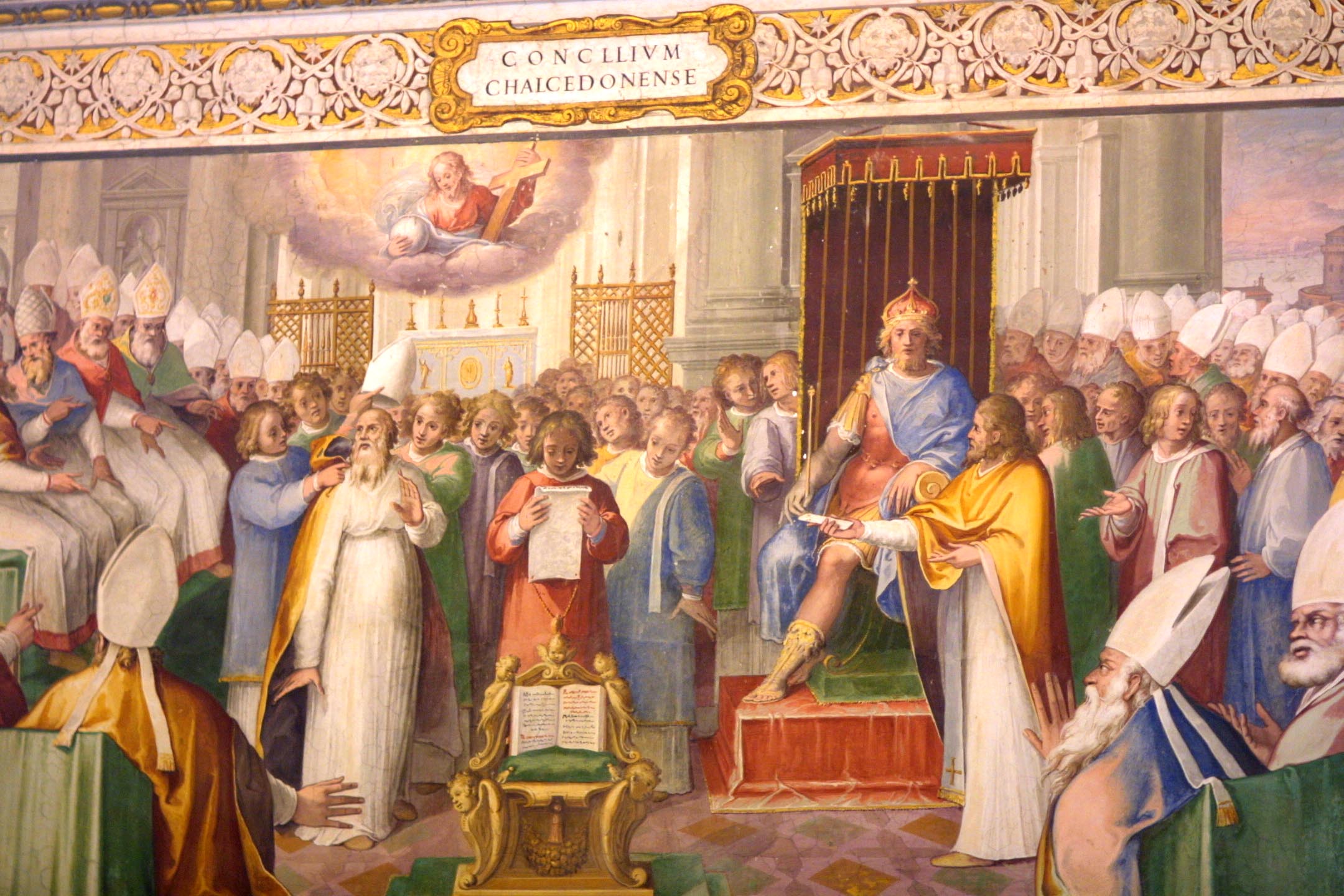
Yesterday, in my "Pivotal Moments in Christian History" class, I talked about the differences between the Alexandrian and Antiochene "schools" of thought, and how it relates to Christology. Both agreed that God was immutable and eternal, but the two schools differed on how the Almighty could be united with a human person. Whereas the Alexandrians tended to stress the divinity of Christ, the Antiochenes typically focused on Jesus' humanity. We then discussed some of the leading thinkers that represented these schools of thought, including Apollinaris, who argued that Jesus had a physical body but did not have a human intellect (replaced by the divine Word of God), and Nestorius, who supposedly divided Jesus' nature into two beings (I explained Nestorius's view as a kind of Christological pantomime horse). Much of the debates between the two parties were political in nature, but they did lead to an important theological decision at the Council of Chalcedon (451AD), which declared that Christ had "two natures in one person."

Later in the day, I was thinking about the Alexandrian/Antiochene debates on Christ's nature and how it might relate to the role of the humanities professor. A humanities professor is supposed to teach and research, but there seems to be much discussion today on where to place the emphasis. While small, liberal arts colleges tend to favor the teaching aspect of the professorship, larger institutions encourage its faculty members to be primarily researchers.

I have been thinking about the nature of the humanities professor because I am trying to figure out how much time I should devote to teaching and research in my new role as a tenure-track, assistant professor. When I started on my journey to become a full-time academic, I was motivated by the teaching aspect of the job. I enjoy, for example, facilitating discussion on big ideas and concepts that pertain to religious history and thought. But while I was working on my PhD, I developed a deep love for research and writing. When applying for faculty jobs, I soon realized that colleges and universities have different expectations for its professors. While virtually all institutions of higher learning expect its humanities professors to be teachers, it is often one's publications that leads to a successful appointment, and, later, promotion.

So, what does it mean to be a humanities professor? And more specifically, how much emphasis should be placed on teaching and research? Should a professor concentrate more of his or her energy on teaching or research? Perhaps we need to call an ecumenical council within the humanities to decide on this matter. Within my own discipline, I look forward to the related discussion that I imagine taking place in September 2014 at the biennial Conference on Faith and History meeting at Pepperdine University, with the theme of "Christian Historians and Their Publics."

Saturday, 5 October 2013

The Scandal of the Evangelical Mind as a Turning Point in History

I am finishing up writing online quiz questions from Mark Noll's book, Turning Points: Decisive Moments in the History of Christianity, intending to use these questions for my upcoming spring 2014 course, "Pivotal Moments in Christian History." In the afterword, Noll speculates on what may constitute as "turning points" in the history of Christianity within the recent past.

Noll writes, "With the possible exception of a few Roman Catholic popes and a rare Protestant of international stature such as Billy Graham, it does not seem likely that any particular individual of the recent past will be seen to have exercised the long-term impact that historians have described for, say, Constantine, Benedict, Charlemagne, Thomas Aquinas, Martin Luther, and the missionary pioneers Francis Xavier, Bartholomaus Ziegenbalg, and William Carey." Nevertheless, Noll names several individuals of note who have made an impact on the history of Christianity in recent years, including C.S. Lewis, Martin Luther King Jr., Karl Barth, Hans Urs von Balthasar, Bishop Desmond Tutu, and Mother Teresa.

Although Noll is too modest to suggest this, I wonder if his book, The Scandal of the Evangelical Mind (1995), could be counted as a turning point, at least when considering the recent past in American Protestantism. Noll's book led to the founding of Books and Culture and influenced a host of evangelicals to become more actively involved in the intellectual development of Christianity in the academy as well as the wider church. If such a chapter is written on the influence of moderate evangelicals in the academy, other people would certainly need to be considered. In America, that would mean mentioning the contributions to scholarship that Nathan Hatch, George Marsden, and Harry Stout have made. In 1996, Maxie Burch was keenly aware of the influence of Noll, Hatch, and Marsden when writing The Evangelical Historians, and a glimpse of the popularity of Stout's work was evident among those who packed the 2012 ASCH session commemorating the twenty-fifth anniversary of The New England Soul. If examining the influence of academic evangelical historians in the last few decades, we would also need to recognize the British historian David Bebbington and the late Canadian scholar, George Rawlyk.

As some of these evangelical stalwarts transition into retirement, it will be interesting to see who will emerge as notable scholars in subsequent generations.

Tuesday, 17 September 2013

Pivotal Moments in Christianity History Accepted!

I found out recently that my proposed course, "Pivotal Moments in Christian History" was accepted for the upcoming spring semester! This course will cover the whole of church history in one semester, but with particular emphasis on the major events and people in the history of Christianity.

I am fairly certain that I will utilize Mark Noll's Turning Points: Decisive Moments in the History of Christianity (third edition), but I am also looking at Church History (volume one and two), published by Zondervan as well as Bruce Shelley's Church History in Plain Language (third edition). Pivotal Moments in Christian History will be offered as an upper-level elective (4000 level course), and cross-listed in religion and history.

Sadly, I won't be able to teach "Religion in the Age of Wesley, Whitefield and Edwards" in the spring. This was a course that I designed and implemented last year while testing my idea for an eighteenth-century evangelical anthology. I was hoping to teach Religion in the Age of Wesley, Whitefield, and Edwards next semester and use my book, Early Evangelicalism: A Reader as one of the textbooks. Instead, I will be teaching REL 3620: Modern Christian Thought for the third time (no complaints since I love this course too!).

As I tend to be a purest, I have felt compelled to limit my teaching on Modern Christian Thought to 19th- and 20th-century liberal Protestants, including F. Schleiermacher, G. W. F. Hegel, Paul Tillich and the so-called "Neo-Orthodox" thinkers, Rudolf Bultmann, Karl Barth, Emil Brunner, and Dietrich Bonhoeffer. However, this time I am going to restructure the course. Since REL 3620 does not have any prerequisites, students with no church history or theological training are immediately forced to tread water in the deep end with primary-source readings from Schleiermacher, Kant, and Hegel. Imagine trying to explain Schleiermacher's view of "God-consciousness" or Hegel's idea of Geist to undergraduate students who have no knowledge of Christology or Pneumatology. My new plan is to use Justo Gonzalez's A History of Christian Thought, volume 3, as the text, which covers historical theology from the Reformation to the 20th century. In using this book, however, I am having a difficult time deciding what other books to use. As much as I like the Gonzalez text, it is very heavy on Reformation thought (more than half the book), with very little on the 18th-century, before turning to 19th- and 20th-century theology.

With that in mind, I am wondering if I should supplement Gonzalez with Bettenson's and Maunder's Documents of the Christian Church (I thought about using my Early Evangelicalism along with the Bettenson and Maunder reader, but decided to wait and offer a course specifically on the history of evangelicalism or 18th-century religion), or perhaps pick a few primary-source readings from the 16th to the 20th centuries.

If anyone knows of an anthology of primary sources that focuses on theology, from the 16th century to the present (as opposed to the whole of Christian thought since the early church), I would be very interested.

Wednesday, 21 August 2013

Pivotal Moments in Christian History

UTC does not offer a general course on the History of Christianity. There are some specialized courses on the catalog, however, including "Early Christian Thought" and "Modern Christian Thought." I have become convinced that our department needs to have a general course for undergraduates that covers the basic narrative of Church History. So, I am thinking about offering a survey of the History of Christianity as a new course in the spring of 2014 or next year.

The challenge, as Miles Mullin and others have identified, is condensing the whole of Christian history into a single semester. Usually, courses on the History of Christianity at seminaries and graduate schools are broken up into two separate semesters. Often "The History of Christianity I" surveys the Early Church up to the time of the Reformation during a Fall semester, with "The History of Christianity II" picking up the narrative from the end of the Reformation to the present. As Mullin points out, it is very difficult to span two thousand years of religious history in one semester, and it is almost as challenging to find a textbook for students to use that is not overwhelming in details, laborious, or multiple volumes.

Despite these challenges, I am going to try teaching a one-semester course anyway. Although I have never taught Church History in this way, I am leaning towards taking the Mark Noll approach and focusing on special "turning points" in the History of Christianity, such as the Council of Nicaea, the East-West split, the Reformation, and so on. If I take this tactic, and I am allowed to teach this course, I will probably choose Noll's Turning Points: Decisive Moments in the History of Christianity as the textbook, which has recently come out in a third edition.

So, what should I call a one-semester course on the History of Christianity? This is another problem. Since this will most likely be an upper-level elective, no one at UTC will be required to take it. I will be competing against other offerings in our department, such as "Satanism, Witchcraft, and Spirit Possession" (this class always fills), "Holocaust and Genocide," and "Yoga and Tantric Mysticism." Would students use precious elective credits to take a course with a bland name like "The History of Christianity" or "Survey of Church History"?  In thinking about a title for my course, here's what I've come up with: "Pivotal Moments in Christian History." Let me know what you think. I would welcome suggestions for a different title.


Friday, 20 July 2012

Turning Points, Third Edition

I'm back in Chattanooga and thankful that I arrived safely after driving 2,400 miles over the course of nine days. I visited archives in Washington D.C., Philadelphia, Hartford, New Haven, Boston,  Concord (New Hampshire), and New York City. I have about a month before the fall semester begins at UTC to plow through the material that I have collected and determine which manuscripts and rare books to include in my forthcoming reader. My hope is to finish a draft of the anthology before the start of the fall semester.

When I went to my office today, I was pleasantly surprised to find a gratis copy of Mark Noll's third edition of Turning Points: Decisive Moments in the History of Christianity from Baker Academic in my faculty mailbox. This is the best single volume on the history of Christianity. It is written primarily to be used in single-semester courses on the history of Christianity. If you only have one semester to cover the major people, themes, and events in church history, Noll's book is the obvious choice for a textbook.