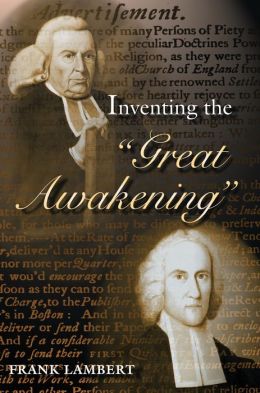
Lambert is one of the few historians who recognizes the significance that print media had on the growth of evangelicalism in the eighteenth century. He offers helpful narratives of how works by Edwards and other revivalists were published, giving further details on specific booksellers and printers in America and Britain who became involved in the Old Light-New Light debates over the authenticity of the awakenings as a work of God. Samuel Kneeland and Timothy Green, for instance, not only printed the bulk of Edwards's works coming out of Boston, but they also provided favorable news of the revivals in their newspaper, the Boston Gazette in the 1740s. Contrast Kneeland and Green with the Boston printer Thomas Fleet, who buttressed the criticism of the Old Light ministers against the revivals by writing caustic editorials on George Whitefield and traveling itinerants in his Boston Evening-Post. Such behind-the-scenes stories in Lambert's book reminds us that scholars have not yet fully explored the Great Awakening despite the vast literature on this event.
Showing posts with label The Great Awakening. Show all posts
Wednesday, 15 January 2014
Revisiting the Great Awakening
Lambert is one of the few historians who recognizes the significance that print media had on the growth of evangelicalism in the eighteenth century. He offers helpful narratives of how works by Edwards and other revivalists were published, giving further details on specific booksellers and printers in America and Britain who became involved in the Old Light-New Light debates over the authenticity of the awakenings as a work of God. Samuel Kneeland and Timothy Green, for instance, not only printed the bulk of Edwards's works coming out of Boston, but they also provided favorable news of the revivals in their newspaper, the Boston Gazette in the 1740s. Contrast Kneeland and Green with the Boston printer Thomas Fleet, who buttressed the criticism of the Old Light ministers against the revivals by writing caustic editorials on George Whitefield and traveling itinerants in his Boston Evening-Post. Such behind-the-scenes stories in Lambert's book reminds us that scholars have not yet fully explored the Great Awakening despite the vast literature on this event.
Labels:
Frank Lambert,
Jonathan Edwards,
The Great Awakening
Wednesday, 23 May 2012
Native Americans and Christianity
I just finished reading Linford Fisher's book, The Indian Great Awakening: Religion and the Shaping of Native Cultures in Early America.
For the most part, this is a wonderful monograph with lots of great context on Native American culture in early America. I must say, however, that I had my doubts about the book early on when I read the introduction. Fisher mistakenly describes the Great Awakening as a series of revivals in America as well as the Caribbean, Britain, and Europe. Even though he cites Tommy Kidd's work, it is clear that Fisher does not understand that the Great Awakening was distinct to America, and that the Evangelical Revival is the proper term for revivals that took place in Britain. Further, I initially questioned one of Fisher's main arguments: that "affiliation" is a better term to describe Native Americans' conformity to Christianity during the 18th century (as opposed to "conversion"). Fisher concludes that because Native absorption of Christianity ebbed and flowed, peaking at the time of the Great Awakening in the 1740s and declining in the subsequent decades of the eighteenth century, that it is best to say that Indians "affiliated" with Christianity. That is to say, they took what they wanted from Christianity and discarded the other elements that they did not find useful. Since I initially doubted whether Fisher understood the Great Awakening, I wondered if Natives who later rejected Christianity were basically the same as white colonists who Edwards and other evangelicals described as losing their zeal after the fires of the revival began to cool.
Fisher, however, convinced me that the Native American outlook on religion is much different than the way that Europeans view faith-based matters. There seems to be a range of beliefs among various American Indians regarding Christianity--from the wholehearted embrace of Samson Occom to complete rejection. Complicating matters was the fact that the most sincere evangelicals often abused their relationships with Native communities by vying for land and, in the case of Eleazar Wheelock, using money earmarked for Indian missions to train elite white colonists of British origin. While I do not think that Fisher thoroughly analyzed the Native American experience of conversion (in contrast with white colonists at the time of the Great Awakening), he has provided enough data for scholars to rethink Native adoption of Christianity in light of the culture and traditions at that time.
For the most part, this is a wonderful monograph with lots of great context on Native American culture in early America. I must say, however, that I had my doubts about the book early on when I read the introduction. Fisher mistakenly describes the Great Awakening as a series of revivals in America as well as the Caribbean, Britain, and Europe. Even though he cites Tommy Kidd's work, it is clear that Fisher does not understand that the Great Awakening was distinct to America, and that the Evangelical Revival is the proper term for revivals that took place in Britain. Further, I initially questioned one of Fisher's main arguments: that "affiliation" is a better term to describe Native Americans' conformity to Christianity during the 18th century (as opposed to "conversion"). Fisher concludes that because Native absorption of Christianity ebbed and flowed, peaking at the time of the Great Awakening in the 1740s and declining in the subsequent decades of the eighteenth century, that it is best to say that Indians "affiliated" with Christianity. That is to say, they took what they wanted from Christianity and discarded the other elements that they did not find useful. Since I initially doubted whether Fisher understood the Great Awakening, I wondered if Natives who later rejected Christianity were basically the same as white colonists who Edwards and other evangelicals described as losing their zeal after the fires of the revival began to cool.
Fisher, however, convinced me that the Native American outlook on religion is much different than the way that Europeans view faith-based matters. There seems to be a range of beliefs among various American Indians regarding Christianity--from the wholehearted embrace of Samson Occom to complete rejection. Complicating matters was the fact that the most sincere evangelicals often abused their relationships with Native communities by vying for land and, in the case of Eleazar Wheelock, using money earmarked for Indian missions to train elite white colonists of British origin. While I do not think that Fisher thoroughly analyzed the Native American experience of conversion (in contrast with white colonists at the time of the Great Awakening), he has provided enough data for scholars to rethink Native adoption of Christianity in light of the culture and traditions at that time.
Labels:
Linford Fisher,
The Great Awakening
Subscribe to:
Posts (Atom)
